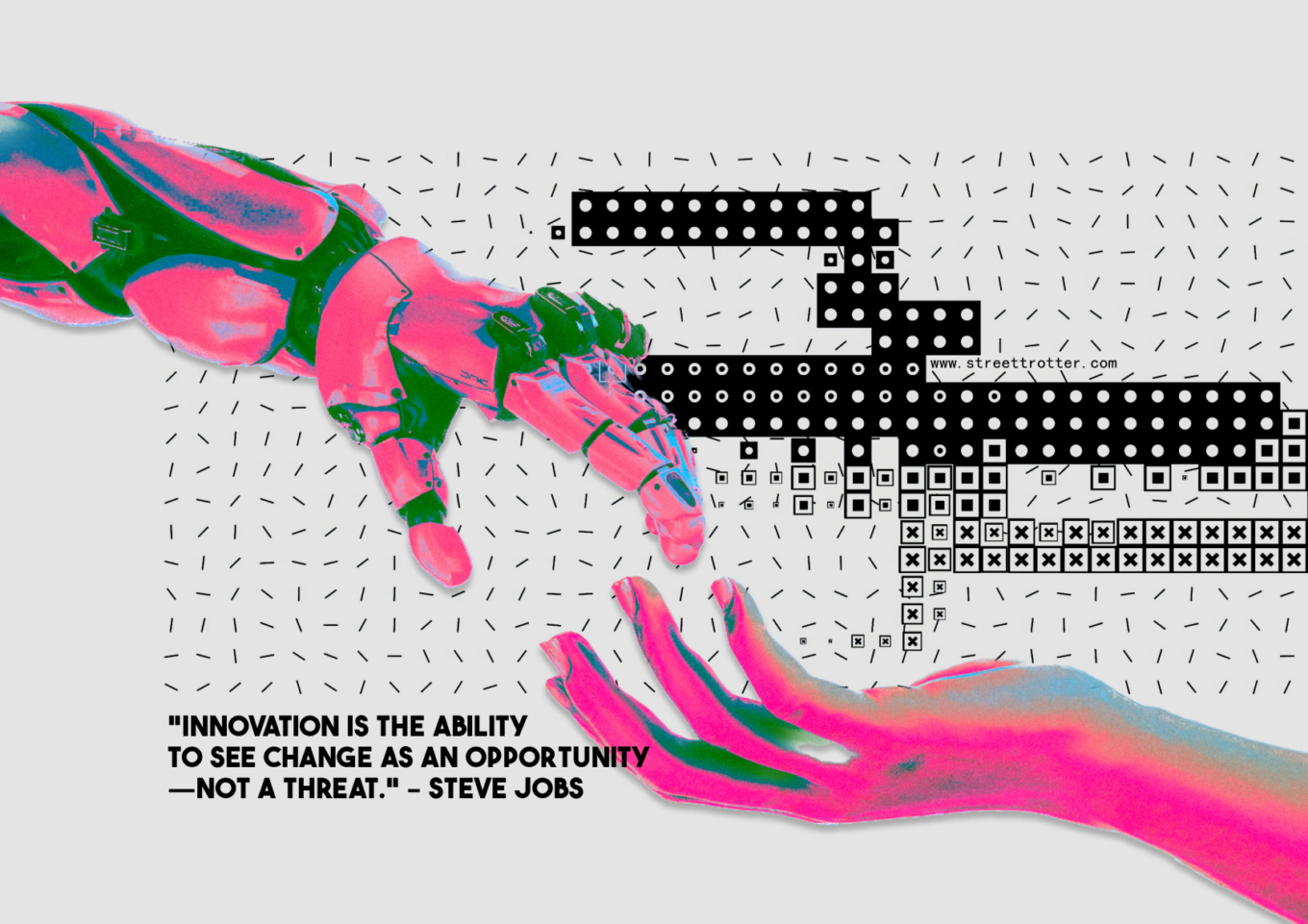
2024 felt like a turning point for UX design—a year defined by uncertainty and transformation. Layoffs rippled through the industry, entire teams disappeared, and AI edged closer into our workflows, reshaping what it means to be a designer. Clients hesitated, budgets tightened, and the once-clear paths of our careers seemed blurred by societal and economic turbulence.
As a mentor on ADPList, I spent countless conversations listening to mentees wrestle with questions about their future. Many felt lost or unsure, grappling with what their roles would look like in this new reality. And I shared their concerns. Half the year was a mix of observing, reading, reflecting, and recalibrating my own perspective.
It’s no longer just uncertainty—it’s the new normal. Our industry is evolving in ways that demand attention, adaptation, and resilience. In this article, I’m breaking down the pivotal shifts in UX design that are redefining how we work, collaborate, and thrive. These are the trends shaping our field, and they’re impossible to ignore.
#1) AI in Design: The Shift from “Nice-to-Have” to “Need-to-Have”
Let’s face it: AI is no longer just a buzzword. It’s everywhere. When I first started hearing about how AI could help in design, I was skeptical—probably like many of you. Would it actually replace designers? Could it really understand creativity, or was this all just hype? But fast-forward to now, and it’s impossible to ignore how deeply AI has integrated into our workflows.
In the past year alone, I’ve seen tools like ChatGPT go from “cool toy” to an actual productivity powerhouse. Writing reports, creating personas, synthesizing hours of research into clear insights, analyzing user interviews, generating UI concepts—it’s all happening faster and more efficiently than ever before. And this isn’t about replacing what we do as designers; it’s about amplifying it.
What’s really striking to me is how AI has gone from being a “nice-to-have” to a “you-better-have-this-or-you’re-lagging-behind.” It’s no longer a bonus to adopt AI tools; it’s becoming the standard. Design teams are integrating these tools into everyday processes—not as an experiment, but as a core part of getting things done.
That said, there’s still no definitive playbook on how to use AI in design. Sure, there are blog posts and YouTube tutorials, but figuring out how to truly make it work for your specific team and challenges? That’s a whole other ballgame.
I’ve started to look at AI less as a threat and more as a partner. Yes, it takes over the mechanical stuff—tasks that used to take hours or days are now done in minutes. But that means we get to focus on the parts of design that AI can’t touch (at least for now): the strategy, the empathy, the big-picture thinking.
#2) Not Just Screens Anymore: AR, VR, and the Expanding UX Landscape
UX design in 2020, the focus was on screens—desktop, mobile, and eventually wearables like smartwatches. Each new device introduced a fresh set of challenges—different screen sizes, resolutions, and user behaviours to account for. Over time, this landscape expanded as more devices emerged, but it was still all about optimizing for screens.
In 2024, the lines between physical and digital environments are increasingly blurred. With AR and VR technologies becoming more mainstream, designers are moving beyond traditional interfaces. Spatial design is taking center stage. As immersive experiences grow in popularity, we’re not just designing for screens—we’re designing for spaces. This new realm involves virtual worlds, gaming, and voice assistants, where design transcends the traditional boundaries of a flat screen.
We now have to think in terms of interaction, context, and seamless experiences in environments where screens are not always present.
What does this mean for the future of UX? The need for new skills and tools is undeniable. As we branch into new platforms, we must adapt our thinking and workflows to accommodate these experiences. It’s no longer enough to master mobile and desktop design; we must understand how to craft immersive, interactive environments that push the limits of what technology can do.
#3) Downsizing Design Teams: The Inevitable Impact of AI
This isn’t a wild guess or speculative prediction—it’s happening, and if you’re paying attention, you’ll see it coming. The downsizing of design teams is becoming a reality, largely because of AI’s ability to handle time-consuming, repetitive tasks with remarkable efficiency.
Take UX research as an example. A year ago, the process was a labor-intensive endeavor that stretched across weeks, even months. Crafting research goals, writing participant scripts, analyzing interview transcripts, synthesizing mountains of data, and generating detailed reports—all of this required not just expertise but time. The mechanical nature of these steps meant dedicating hours to tasks that, while essential, were hardly the core of what makes research meaningful.
Enter AI. Tools today can automate much of this workflow in minutes. AI can analyze your goals, generate scripts, sift through transcripts for insights and quotes, and even create first drafts of reports. Suddenly, the work that once demanded a large team and a long timeline is reduced to a fraction of the effort.
What does this mean for design teams? Quite simply, it changes the game. With AI handling the mechanical, redundant tasks, researchers and designers are freed to focus on the thoughtful, strategic work: interpreting findings, aligning insights with stakeholder goals, and deciding what’s actionable and what’s not. You’re spending your energy where it truly matters.
But here’s the catch. When one person can do what used to take a team of five, the math is clear: teams will get smaller. The efficiency AI brings isn’t just about working faster; it’s about doing more with fewer people.
Organizations won’t need as many hands to manage the same workload, which inevitably leads to downsizing. This shift isn’t inherently bad—it means that those who remain on teams will likely focus on higher-value work. But it’s also a wake-up call. If you’re in design, it’s time to think about how you can pivot, adapt, and position yourself to thrive in this leaner, AI-driven landscape.
#4) The Era of Multidisciplinary Designers: Being More Than Just UX or UI
To break into UX design five years ago, the advice was clear: pick your path. Companies valued specialization, and roles were clearly defined—UX designers focused on user flows and research, UI designers crafted the visual experience, researchers dived into data, and writers brought clarity to content. Teams were carefully built, with each role bringing a specific skill set to the table.
Fast forward to today, and the landscape looks very different. The rise of AI and the increasing demand for efficiency have blurred those once-distinct lines. The industry is shifting toward hybrid roles, and job titles like “Product Designer” are becoming far more common than UX or UI specialists.
Why? It’s simple economics. Companies are building leaner teams, and with AI handling much of the repetitive, mechanical work, they’re looking for designers who can do it all—or at least more than one thing. UX designers are now expected to have UI skills. Product Designers are expected to handle end-to-end processes, from user research to interface design. And niche roles like UX writers or researchers? Those have become rare, often absorbed into broader responsibilities.
This shift is something I’ve seen firsthand. A job posting that once called for “UX designer” now reads more like a wish list—someone who can research, strategize, wireframe, prototype, test, and even code. Employers are asking for more because the tools we have now enable us to do more.
But this change isn’t just about adapting to job descriptions. It’s about rethinking what we bring to the table as designers. Specialization might have been enough before, but now we need to be multidisciplinary, adaptable, and continuously learning. It’s no longer sufficient to say, “I’m a UX designer” or “I focus on UI.” You’ll need to understand how to do both—and beyond.
#5) The Evolving Role of Design Managers: Contributing to the Work, Not Just Managing It
When I transitioned from being a design lead to a managerial role, I made a conscious decision to stay hands-on. While I was managing a growing team, a significant part of my time was still spent designing. Traditional management models might view this as “extra,” but for me, it was a non-negotiable. I didn’t want to lose the craft that brought me into design in the first place.
Looking back, that decision seems more relevant than ever. The industry is changing rapidly, and 2024 saw major companies like Meta and Amazon announcing layoffs that targeted managerial roles. This trend shouldn’t come as a surprise. When organizations prioritize profitability, streamlining layers of management often becomes a logical step. The result? Fewer managers who are expected to contribute directly to the work.
For design leadership, this signals a fundamental shift. Being a manager in today’s design world isn’t just about delegating tasks, overseeing timelines, and running team meetings. Companies are expecting more. If you’re a design manager, you’re no longer exempt from deliverables—you’re part of the production line.
This means you’ll have your own tasks, your own deadlines, and your own share of the design work to complete. It’s not enough to guide others; you’ll need to actively participate. Your hours will be accounted for just like everyone else’s, and your value will be measured by both your leadership and your individual contributions.
#6) A Reverse Migration – Away from UX Design
When I switched to UX design five years ago (2019-2020), the industry was booming. Bootcamps were springing up everywhere, promising a quick, accessible path into tech with the allure of creativity and handsome salaries. Many professionals, myself included, made the leap from entirely different fields, drawn by the idea of crafting better user experiences.
However, the landscape has shifted dramatically in recent months. The job market has become increasingly challenging, with a noticeable rise in layoffs and a surplus of designers seeking employment. This saturation has led many to reconsider their career paths, prompting a ‘reverse migration’ away from UX design.
Data from 2023 indicates a substantial decline in UX job listings, with positions for UX researchers and designers dropping by approximately 70% since their peak in early 2022 (Indeed Design). In 2024, the UX design industry witnessed notable layoffs as companies streamlined their operations in response to economic pressures and the integration of AI. Across the tech sector, ongoing reductions in workforce size since 2022 have led to an oversaturated job market for UX professionals. With experienced designers competing for fewer roles, competition has intensified, prompting many to reevaluate their career paths and the sustainability of the UX profession.
This shift is personal for me, too. I can’t help but reflect on how different the landscape was when I entered the field. While I’m grateful for the opportunities I’ve had, I know that if I were starting today, the path might not be as straightforward.





I’m a student looking to begin my part-time journey in the tech world. I’m particularly interested in UI design. However, as AI continues to reshape every industry, I’m wondering—would it be wise to pursue a career in design at this early stage, or should I shift my focus toward AI and machine learning?
Alternatively, would it be more strategic to build a strong foundation in AI while also developing deep expertise in UI/UX, so I can stay competitive within the field I’m passionate about?